

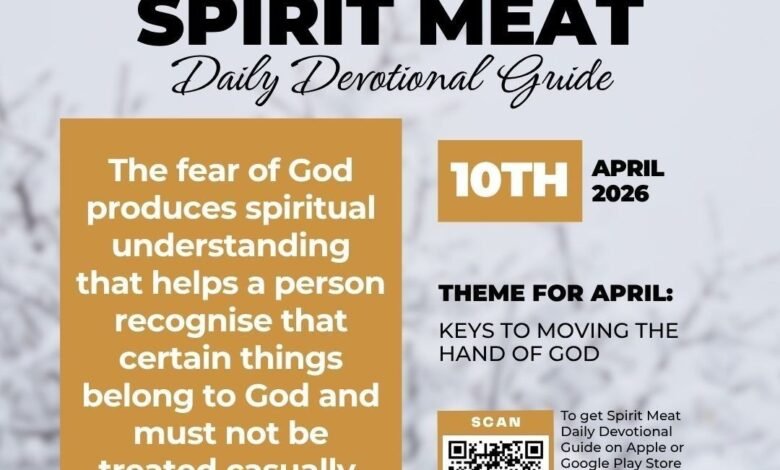
One important evidence of the fear of God in a believer’s life is the ability to distinguish between what is holy and what is common. The fear of God produces spiritual understanding that helps a person recognise that certain things belong to God and must not be treated casually. The Bible instructs God’s servants to teach His people “to put difference between holy and unholy, and between unclean and clean” (Leviticus 10:10). This principle is extremely important in a believer’s walk with God. When people lose the ability to recognise what is sacred, they eventually cross boundaries that provoke God’s displeasure. Many spiritual problems begin when believers treat holy things with the same attitude they use for ordinary matters. The fear of God helps us recognise that God’s presence, God’s Word, and the things dedicated to Him must be approached with reverence. A believer who understands this principle does not treat spiritual matters lightly because he knows he is dealing with a holy God whose honour must be preserved.
The Bible provides a striking illustration of this truth in the story of King Belshazzar. During a royal banquet, Belshazzar ordered the sacred vessels that had been taken from the temple in Jerusalem to be brought into the feast so that he and his guests could drink wine from them (Daniel 5:2–4). To Belshazzar, they were merely beautiful cups made of gold and silver, but to God they were consecrated vessels set apart for sacred use. The moment those holy vessels were used carelessly, God responded immediately. A mysterious hand appeared and wrote a message of judgement on the wall. That very night Belshazzar lost his kingdom and his life. The lesson is clear: God pays attention to how people treat what belongs to Him. The king could have continued his feast with ordinary cups, and nothing would have happened, but once he dishonoured what was sacred, he provoked the hand of God against himself.
This story reminds us that the fear of God is not merely an emotional feeling; it is a lifestyle that recognises and respects the things God has set apart.
When the fear of God governs a believer’s heart, it shapes daily behaviour in powerful ways. It affects how we approach worship, how we respond to the Word of God, and how we treat the things that belong to Him. The believer who fears God becomes careful about attitudes that might dishonour Him. This reverence also protects us from reckless decisions that could bring spiritual consequences. The fear of God is therefore not a burden but a safeguard. It keeps our hearts aligned with God and positions us for His favourable hand to work in our lives. As believers learn to distinguish between what is holy and what is common, they develop a deeper relationship with God and experience the blessing that flows from living in reverence before Him.
THOUGHT TO PONDER: Do I treat the things of God with the reverence they deserve? What attitude must I adjust to better distinguish between what is holy and what is common?
PRIÈRE: Father, help me develop a deep reverence for what belongs to You. Teach me to recognise what is holy and honour it so that my life continually reflects the fear of the Lord, in Jesus’ name. Amen.
LA BIBLE EN UN AN :
Deuteronomy 34:1-Joshua 2:24, Luke 13:22-14:6, Psalm 79:1-13, Proverbs 12:26


SPIRIT MEAT SUR ANDROID ET iOS

Spirit Meat on Android: https://bit.ly/SpiritMeatAndroid
Spirit Meat on iOS: https://bit.ly/SpiritMeatIOS
YouVersion: http://bible.us/r/I8w

————————————————————

Jésus est Seigneur !

————————————————————
www.dreamcentreoftheloic.org
www.soundcloud.com/reverendareogun
www.dciradio.org
https://bit.ly/SpiritMeatDailyDevotionalWhatsApp
YouTube Channel- Sola Areogun Ministries
+2348037252124
#SpiritMeat
#ReverendAreogun
————————————————————

Copyright ©️ 2025
The public is hereby informed that exclusive copyright
subsiste dans cette œuvre et donc toute tentative de reproduction,
copier, distribuer au public à des fins commerciales, publier tout
traduction de l'œuvre, réaliser un film relatif à l'œuvre,
faire une adaptation de l'œuvre, soit dans son intégralité, soit en grande partie
une partie de l'œuvre, soit dans sa forme originale, soit sous toute autre forme
dérivé de manière reconnaissable de l'original constitue une atteinte à la
droit de l'auteur et sujet à litige sauf et sauf
l'auteur a officiellement et clairement autorisé ladite personne
ou les personnes ou l'auteur sont clairement mentionnés dans l'œuvre.




 FR
FR  EN
EN